
What a Medicare Supplement actually does
It pays the bills Original Medicare leaves behind — and lets you keep seeing any doctor in the country who takes Medicare, with no networks and no referrals.
A Medicare Supplement keeps you inside Original Medicare and pays the bills Medicare leaves behind. And because you never leave Original Medicare, you keep its best feature: the freedom to see almost any doctor or hospital in the country that takes Medicare. No network to check. No referral to chase. That’s the whole idea.
Medicare Supplements at a glance
- A Medicare Supplement (also called Medigap) works alongside Original Medicare — Medicare pays first, and the supplement pays much or all of what’s left.
- You can see any provider in the country that takes Medicare. No networks, no referrals.
- Your doctor doesn’t care which company’s name is on your card. If they take Medicare, they take your supplement.
- Your one clean, no-questions-asked window to buy is the six months after you turn 65 and enroll in Part B.
- A supplement doesn’t include drug coverage — you add a separate Part D plan for that.
I’ve watched what losing the freedom to choose a doctor does to people — and what keeping it does.
I’ve sat with a lot of people right before they turn 65. The worry is almost always the same: that their health care is about to become a maze of rules, denials, and doctors they can’t see anymore. What nobody tells them plainly is that one of their choices hands that control right back to them.
That’s the part I want you to understand, because it changes how the whole decision feels. I’m not here to sell you anything today. I just want you to walk away clear on how a supplement really works.
What is a Medicare Supplement?
What is a Medicare Supplement, and how does it work?
When you turn 65, the mail shows up by the pound — brochures, urgent envelopes, letters that make a simple choice feel impossible. So let me make it simple. A Medicare Supplement pays the share of the bill Original Medicare leaves to you. It doesn’t replace Medicare. Medicare pays first, then your supplement pays its part of what’s left. You stay in Original Medicare the whole time. You’re just adding a backstop.
Here’s why that backstop matters. Original Medicare is generous, but it was built to leave gaps. For most Part B services, Medicare pays 80% and leaves you the other 20%. There are deductibles too.
And here’s the part that surprises people: on its own, Original Medicare has no yearly limit on what you can owe. One serious illness, one long hospital stay, and that 20% keeps climbing with no ceiling. A supplement closes that hole. It turns an open-ended risk into a small, steady monthly cost.
Key Medicare Supplement terms, explained
Original Medicare
The federal program made up of Part A (hospital) and Part B (doctors and outpatient care). It pays first.
Medigap
Another name for a Medicare Supplement. Same thing.
Coinsurance
Your share of a covered cost — usually the 20% of the approved amount Medicare leaves to you under Part B.
Network
A fixed list of doctors a plan requires you to use. A supplement doesn’t have one.
Referral
Permission from a primary doctor to see a specialist. A supplement doesn’t require one.
Medicare assignment
A provider agreeing to accept Medicare’s approved amount. If they accept Medicare, your supplement works with them.
Guaranteed issue
A protected window when an insurer can’t turn you down or charge you more for your health.
Why no networks or referrals?
Why a Medicare Supplement means no networks and no referrals
Because you never leave Original Medicare, your supplement just inherits Medicare’s rules — and Medicare doesn’t use networks. The rule is simple: if a provider takes Medicare, they take your supplement. It doesn’t matter whose name is on the card.
The company behind your supplement is a silent partner. It pays its share of the bill. It has no say over which doctor you pick, no directory you’re stuck inside, and no power to make you get a referral first.
Want to drive three counties over to the best knee surgeon around? Go, as long as they take Medicare. Visiting family across the country and need care? The same card works there. You’re not asking permission. You’re just going.
of doctors have opted out of Medicare. Among emergency physicians, cancer doctors, and radiologists, it’s closer to 1 in 1,000 — so “any doctor who takes Medicare” really does mean almost all of them.
Source: KFF, 2024
The insurance company’s name on your supplement card means nothing to your doctor’s billing office.
There’s no such thing as being “out of network” with a supplement. The office bills Medicare, Medicare pays its share and passes the rest to your supplement automatically, and your supplement pays its part. Many of the most respected hospitals in the country take Original Medicare — and the supplements that ride along with it — even when they limit the networked plans they’ll work with.
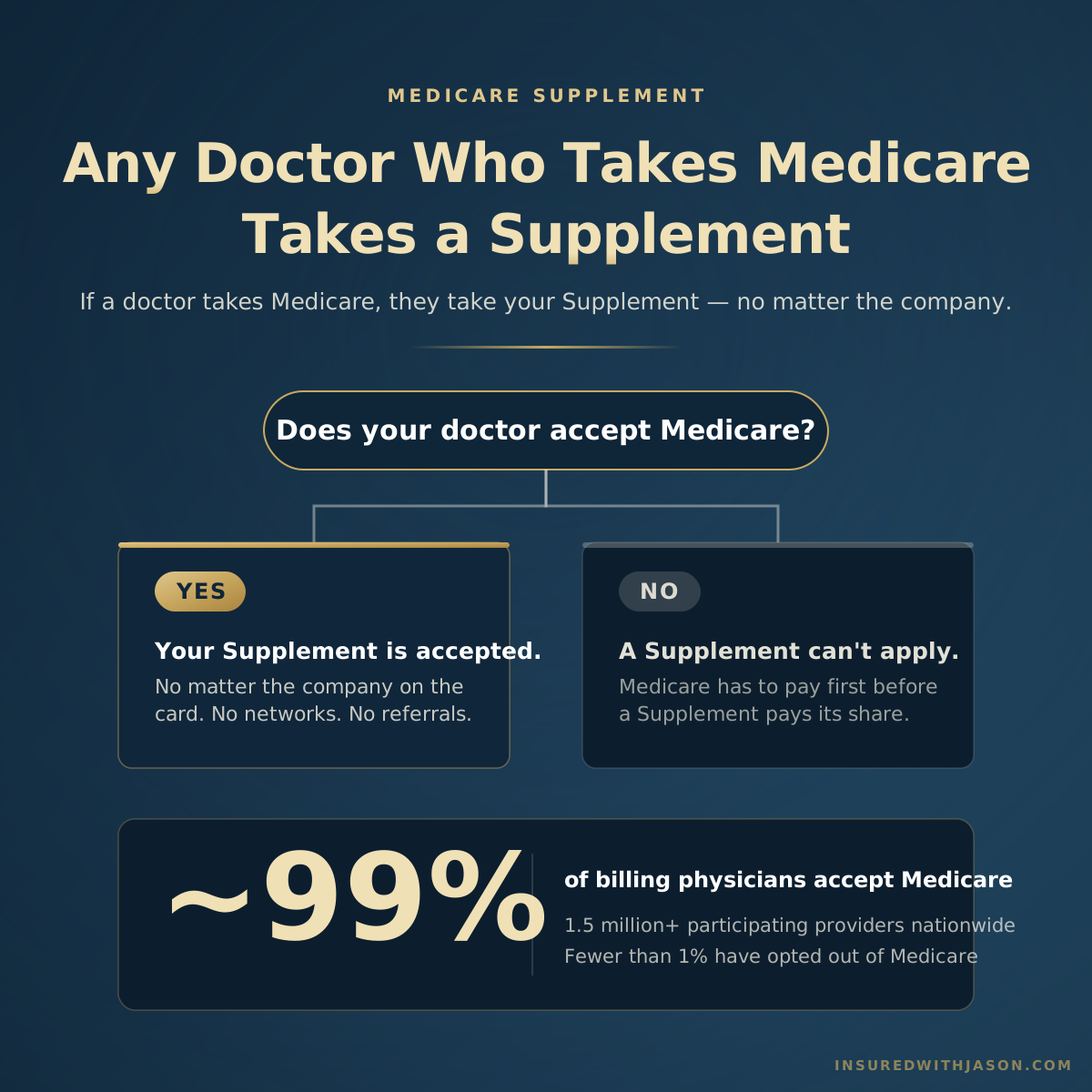
If your doctor takes Medicare, they take your Supplement — no matter which company issued it.
Original Medicare alone vs. with a Supplement
Same doctors, same freedom — the difference is what you pay when something goes wrong.
Original Medicare alone
All the freedom — but the costs have no ceiling.
With a Medicare Supplement
The same freedom, with small, predictable costs.
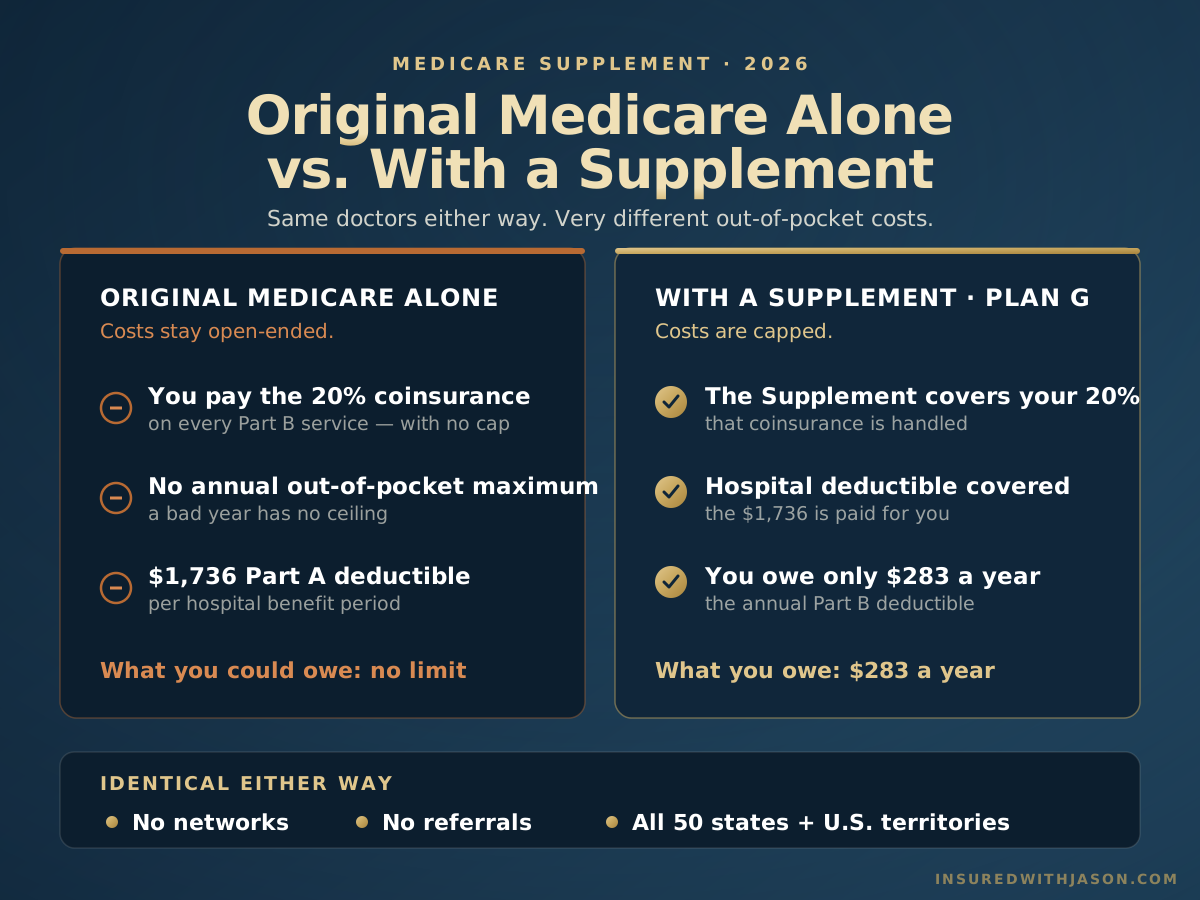
Same freedom either way — but look at what a Supplement does to your out-of-pocket costs.
How much does a Medicare Supplement cost, and what do you actually pay?
You pay a monthly premium for the supplement on top of your Part B premium. In exchange, your costs at the doctor and hospital become small and predictable.
Look at what you face without one. In 2026, after the Part B deductible of $283, Medicare pays 80% and you pay 20% — with no yearly cap. The Part A hospital deductible is $1,736 per benefit period, and that clock can reset more than once a year. A supplement turns those open-ended numbers into a quiet monthly bill you can plan around.
Medicare Supplement plan options: Plan G, Plan N, and high-deductible
Every plan of the same letter covers the same things, no matter who sells it. So you’re really choosing a level of coverage — then shopping on price.
- The most complete coverage for people new to Medicare.
- Most predictable costs of the three.
- Best if you’d rather not think about bills.
- Up to $20 for an office visit.
- Up to $50 for an ER visit that doesn’t lead to admission.
- A lower premium in exchange for a little cost-sharing.
- You cover costs up to a yearly limit, then the plan pays 100%.
- Lowest monthly premium of the three.
- Best for a healthy saver who wants a safety net.
A Medicare Supplement doesn’t hand you a fancier insurance card. It hands the decision about your care back to you and your doctor.
Not sure if a supplement fits your situation?
That’s exactly what I help with
When can you buy a Medicare Supplement?
The best time — and for many people the only easy time — is the six-month window that starts the month you’re 65 and enrolled in Part B. In that window, no company can turn you down or charge you more for your health. You could have a serious diagnosis and still pay the same price as anyone else your age nearby.
That protection is the most valuable thing about the window, and it doesn’t come back.
Your six-month window mostly comes once.
Once it closes, in most states an insurer can read your full medical history and charge you more — or say no. That’s the trap people fall into: someone on a networked plan gets sick years later, tries to switch to a supplement to reach the specialists they need, and finds out they no longer qualify. A few states let you switch with no health questions, but most don’t. One more thing to ask before you sign: how the price grows. Some plans look cheapest at 65, then climb every year as you age.
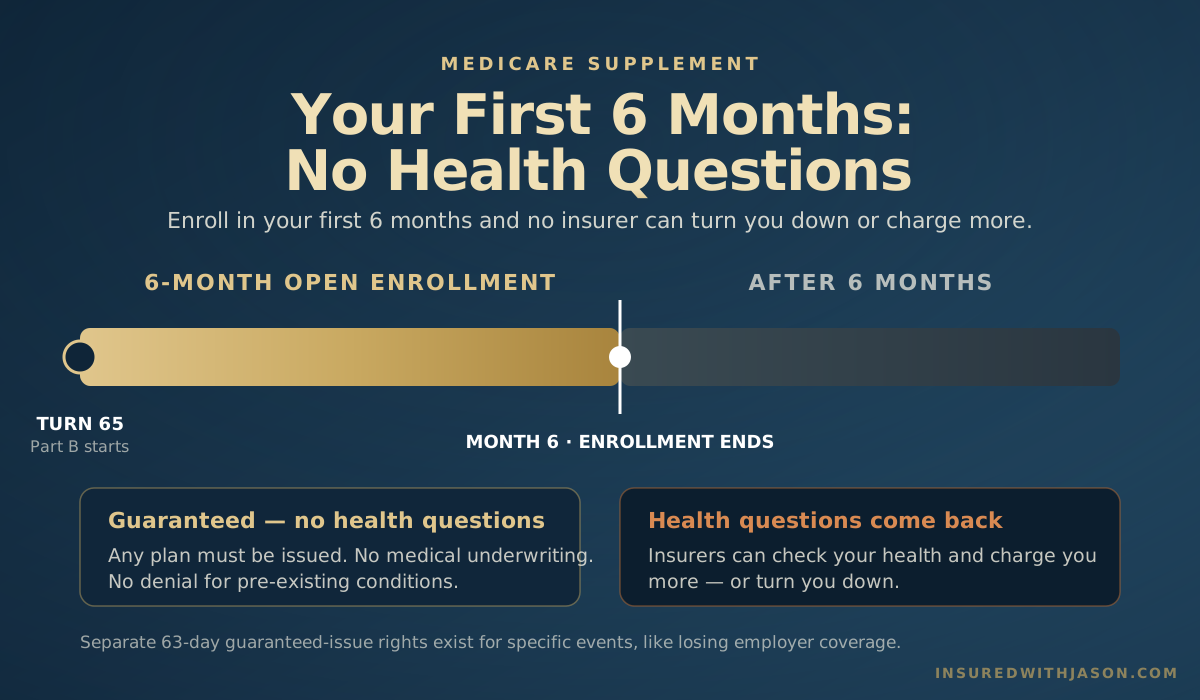
One six-month window opens at 65. After it closes, your health can change the answer.
Getting a Medicare Supplement, step by step
It’s a short, orderly process — here’s the whole thing.
Get on Part A and Part B
A supplement is built to sit on top of Original Medicare, so you need both parts first.
Pick the plan letter that fits
Most people land on Plan G or Plan N.
Compare companies on price
Same letter means same benefits, so you’re comparing cost and reputation — nothing else.
Apply during your window
File during your six-month open enrollment window, while you can’t be turned down.
Add a Part D drug plan
A supplement doesn’t cover prescriptions, so add a stand-alone Part D plan to round it out.
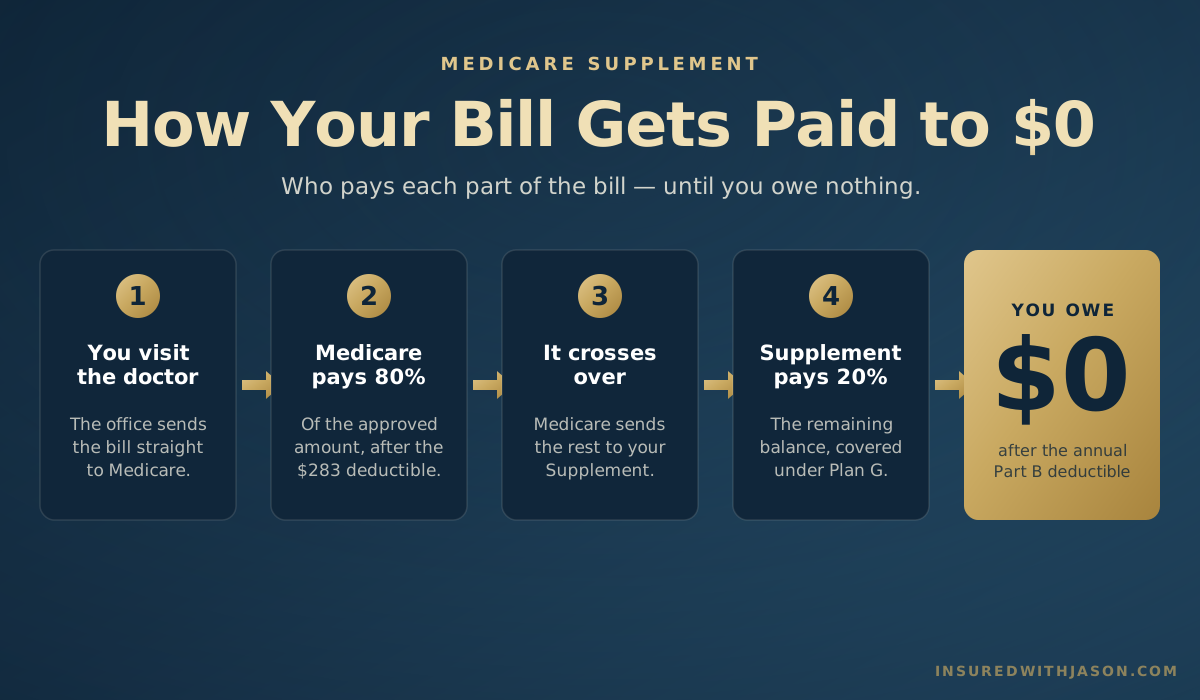
From the front desk to a $0 bill — how the two cards work together behind the scenes.
Who should (and shouldn’t) get a Medicare Supplement?
No plan is right for everyone. Here’s my honest read on where a supplement belongs.
When a Medicare Supplement is the right fit
- Have pre-existing conditions. This is a big one — those conditions can pile up into huge out-of-pocket costs on a networked plan, so you want to use the no-underwriting window to lock in a supplement and fixed, predictable costs.
- Want to see any doctor who takes Medicare, without checking a list or asking permission.
- Want your costs small and predictable instead of open-ended.
- Travel often, or split the year between two states.
- Have a doctor or specialist you don’t want to lose.
- Are turning 65 and can lock in your no-underwriting window.
When a Medicare Supplement isn’t the right fit
- Are in great health and are fine playing the game of networks and prior authorizations to get a lower premium.
- Want one card that bundles medical, drug, dental, and vision together.
- Are on a very tight budget where the monthly premium genuinely won’t fit.
- Are already well past your window with health conditions, in a state without year-round guaranteed issue — you may not pass the health review.
A snowbird who lives in two parts of the country — and needed coverage that traveled with her.
Picture someone who spends the warm months up north and the winter down south. On a networked plan, the months away from home are a headache: emergency-only coverage, out-of-network bills, the fear of needing care in the “wrong” state. With a Medicare Supplement, that worry disappears. She sees her cardiologist up north in the fall and her regular doctor down south in the winter, and the card works the same in both places. No referral, no network, no penalty.
The freedom isn’t just for where you live. It’s for wherever you are.
Frequently asked questions about Medicare Supplements
The ones I hear most often, answered plainly.
Can a doctor refuse my particular supplement company?
No. If they accept Medicare, they accept any standardized supplement, no matter which company issued it. The brand on your card is invisible to their billing office.
Do I need a referral to see a specialist?
No. Original Medicare doesn’t require referrals, and your supplement follows the same rule. You can book the specialist directly, as long as they take Medicare.
Can my supplement drop me if I get sick?
No. As long as you keep paying your premium, the plan is guaranteed renewable — they can’t cancel you for getting older, getting sicker, or filing claims.
Does a supplement cover my prescriptions?
No. You’ll add a separate Medicare Part D drug plan for that — ideally right when your coverage starts, so you avoid a late penalty.
What happens if I move or travel?
Your coverage goes with you. Original Medicare is accepted nationwide, and the supplement rides right along with it — no new plan, no new network to learn.

Is a Medicare Supplement right for you?
No pressure and no obligation — just a straightforward conversation about your health, your budget, and how you like to get your care. I represent you, not an insurance company, so you’ll get a straight answer either way.
This article is general education, not financial, tax, or legal advice. Medicare rules, plan availability, and the figures mentioned (including the 2026 amounts) change over time and vary by state and personal situation. Please confirm the current details and consider your own circumstances before deciding. Jason Gerstenberger, NPN 8616286. Licensed in most states.